Begin with the substrate, not the label on the equipment
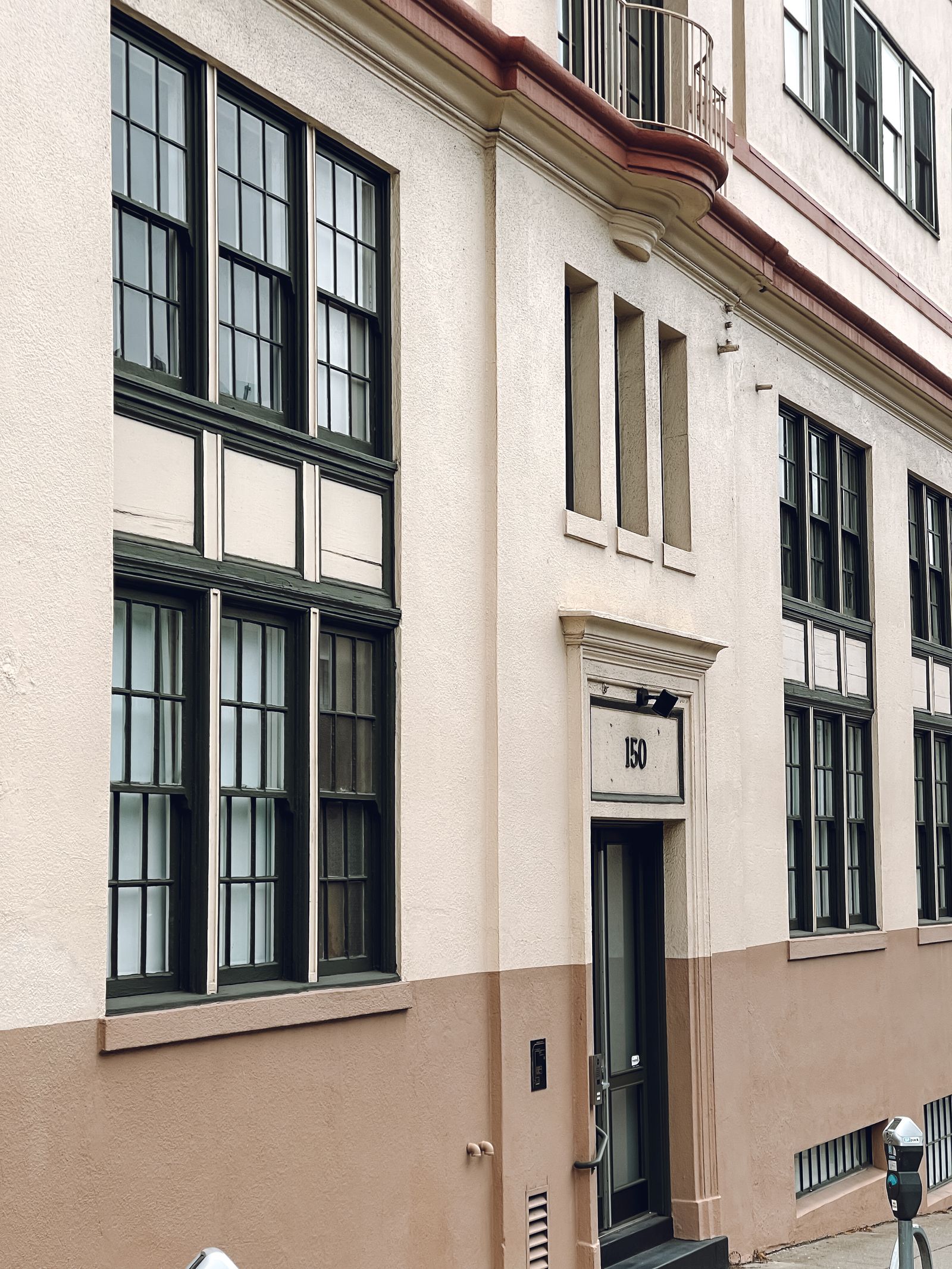
A soft-wash candidate is defined by the material and soil, not by the fact that a building is tall or visibly dark. Tested brick, masonry, concrete, stucco, EIFS, painted surfaces, and compatible cladding may respond to selected chemistry and a controlled low-pressure rinse when the deposit is organic growth, pollen, bird residue, or atmospheric film. The solution still needs correct dwell, temperature, wind, plant protection, and rinsing. Older Millyard masonry, a patched South Willow facade, and a newer insulated-panel warehouse should not share an unexamined recipe.
Pressure washing may be useful on selected durable hardscape, loading areas, concrete, curbs, and other surfaces where the material can tolerate the chosen pressure, flow, distance, and water volume. It is not automatically suitable for brick joints, old mortar, EIFS, stucco, window seals, painted metal, or a damaged coating. Excessive impact can erode joints, drive water into an assembly, strip paint, or spread a problem. The first question should be: what is the deposit, what is the substrate, and what result can the material reasonably support?
- Use soft-wash testing for compatible organic and atmospheric deposits on suitable facade materials.
- Reserve pressure for durable, compatible zones after distance, pressure, and runoff are specified.
- Treat brick, mortar, EIFS, stucco, glass, painted metal, and sealants as condition-sensitive surfaces.
- Separate cleaning from efflorescence, corrosion, coating failure, repair, and envelope defects.
Read Manchester deposits as clues to a different problem
Green or dark film on a shaded wall near the Merrimack or under a canopy may be a candidate for a compatible soft-wash process. A black band at a garage ramp or along a busy road may be soot, tire residue, oil, or embedded traffic soil. White crust on brick can be salt, mineral scale, or efflorescence. Rust-colored streaks may come from fasteners, steel, water movement, or oxidation. A mark below a parapet, gutter, or downspout may indicate a drainage defect rather than a surface-cleaning problem. Increasing pressure because a first pass did not remove the mark can damage the wall without addressing its source.
Manchester's winter exposure makes lower elevations especially important. Road brine and snow storage can concentrate near curbs, ramps, parking decks, and entrances, while spring melt can carry residue into joints and across pavement. A north-facing downtown elevation may remain shaded and damp longer than a sunlit upper wall. A test spot should represent the actual material and deposit, and the proposal should say what improvement is expected, what may remain, and what requires specialty restoration or repair.
Choose the method that can coexist with the operating day
A process that is workable at an empty industrial wall may be disruptive at a downtown storefront or medical building. Elm Street and nearby civic blocks can involve pedestrians, curb parking, deliveries, outdoor dining, and neighboring doors. The Millyard can have shared alleys, tenant entrances, brick details, and event traffic. South Willow properties may need parking aisles, customer routes, drive-through lanes, and landscaping kept open. Elliot-area healthcare work must protect patient drop-off, emergency access, accessible routes, and air intakes. Airport-area and logistics sites add gates, security, trucks, and strict coordination.
Soft washing can reduce impact on selected facade materials, but it still needs dwell time, barriers, hose routing, protection, and a rinse. Pressure washing can create more noise, splash, overspray, and loose soil, even when the surface is durable. The quote should identify staging, entrances kept open, work windows, communication, public separation, vehicle protection, and the handback standard. A method is not appropriate if it produces an attractive wall by creating an unsafe or unusable property edge.
Account for winter, shade, and freeze-thaw in the comparison
New Hampshire weather changes both methods. Freezing temperatures can make walks and rinsed surfaces hazardous and can affect how a solution dwells or how quickly a wall dries. Rain can dilute chemistry and move loosened soil. Snowbanks can redirect runoff toward finished entries. Wind can carry mist across public paths, parked cars, neighboring facades, or airport-controlled areas. Lightning and poor visibility can close an otherwise convenient window. Sun and shade also matter: a south-facing concrete wall and a damp north-facing brick wall may need different timing and follow-up.
A useful comparison includes weather triggers, surface moisture, drying expectations, and a rescheduling plan. It also recognizes that repeated freeze-thaw can expose open mortar, spalling, cracks, failed sealant, and coating loss. Cleaning cannot restore lost material. If a test reveals an unstable or water-sensitive surface, the responsible recommendation may be a smaller scope, a repair sequence, a preservation specialist, or postponement rather than stronger pressure or hotter chemistry.
Compare access honestly, including drone assistance
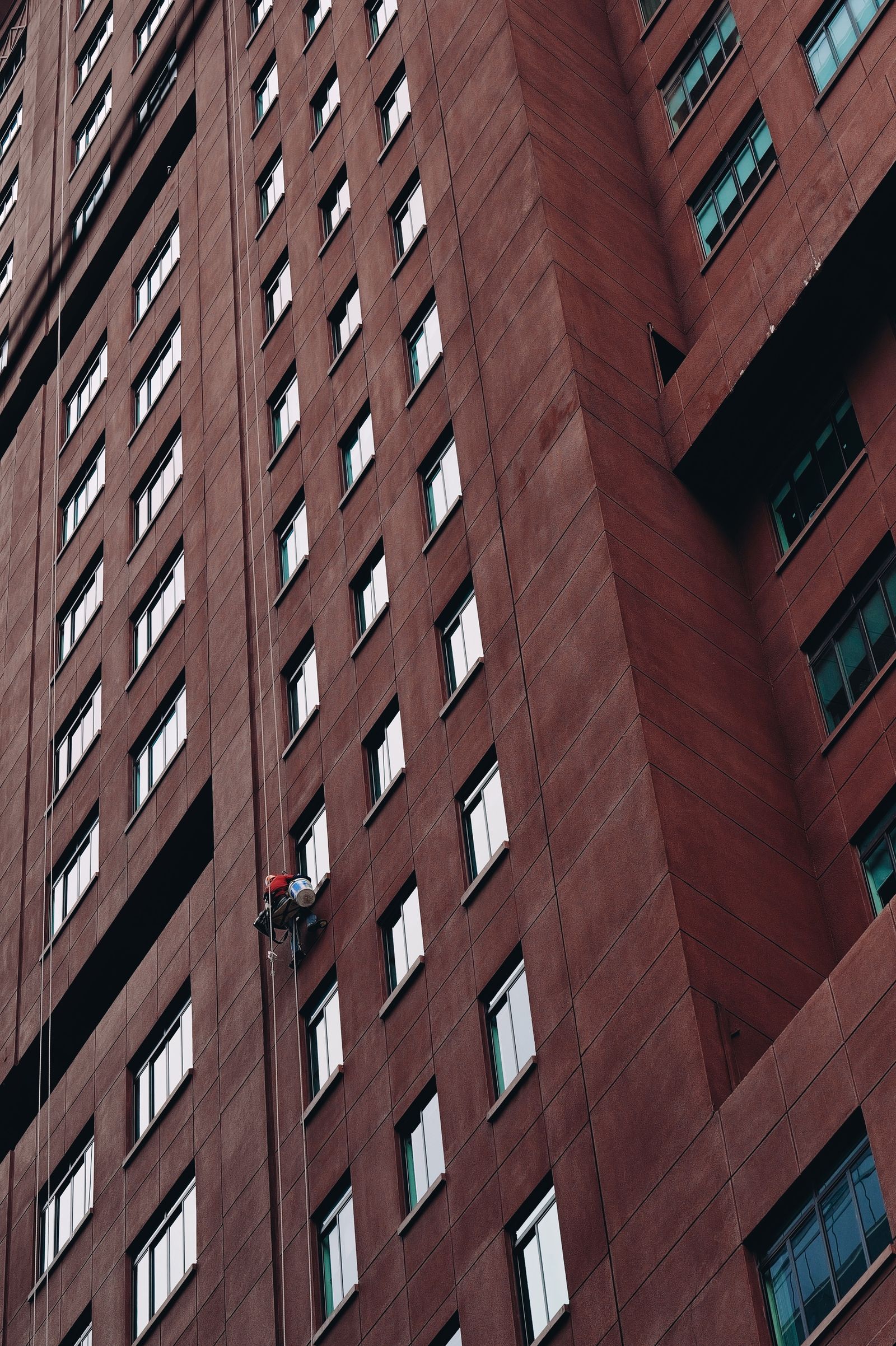
Access determines what a method can actually accomplish. A lift or pole can reach a storefront frame, canopy, cornice, window edge, or recessed detail. Direct access also allows controlled brushing, scraping where appropriate, squeegee finishing, and observation of a surface's response. A drone may support selected broad upper wetting or rinsing where launch space, line of sight, stand-off distance, wind, public separation, and ground coordination are all workable. It cannot feel a loose joint, detail a mullion, repair a parapet, or remove every bonded deposit.
Near Manchester-Boston Regional Airport, airport operations and security expectations add a separate coordination layer. Overhead wires, trees, signs, rooftop units, neighboring buildings, and active roads can also rule out an aerial setup. Commercial drone operations remain subject to applicable Federal Aviation Administration requirements. The method comparison should therefore list access by elevation: drone-assisted application, lift work, pole work, hand detail, or ground pressure washing. If conditions change, the crew needs an alternate method and a clear stop condition.
Treat runoff and protection as part of the method, not an afterthought
Soft washing and pressure washing both create water-management responsibilities. Manchester sites can drain toward curb inlets, catch basins, parking-deck low points, planted islands, basement doors, river-adjacent grades, and public sidewalks. The chemistry, rinse volume, sediment, slope, and discharge path determine the appropriate controls. A nearby storm drain is not an automatic disposal route. Before work, identify flow paths, snow storage, low points, doors, landscaping, air intakes, vehicles, and neighboring property lines.
Depending on the actual scope, controls may include limiting water, protecting plants, diverting flow, collecting or recovering water, filtering sediment, or coordinating with the responsible authority. Pressure may move more soil and water faster; soft washing may require controlled dwell and a thorough rinse. Both can make a walkway slippery or affect a sensitive opening. Ask for method by zone, protection, water assumptions, test-area expectations, runoff controls, included elevations, exclusions, and final documentation so proposals can be compared on outcome and risk rather than a headline pressure number.
Use a decision framework for the Manchester property
Choose a compatible soft-wash approach when the deposit is suitable organic or atmospheric film, the facade has passed a material and condition review, and controlled chemistry, dwell, rinsing, protection, access, and runoff can be managed. Consider controlled pressure for durable compatible hardscape or tested surfaces where force and flow solve a defined problem without harming joints, coatings, glazing, or adjacent property. Use a hybrid scope when a wall field, entry, pavement, canopy, and loading area require different tools. Refer repairs, restoration, corrosion treatment, mineral removal, or coating work when cleaning is not the real fix.
When requesting a Manchester quote, share the address, photos, approximate height, target result, material history, stain locations, work-hour limits, parking or loading rules, water access, drains, and weather constraints. Ask which method applies to each elevation, what a test area will establish, how occupants and the public are protected, how runoff is handled, and what remains excluded. Call +1 239-351-2897 or email contact@dronebuildingcleaners.com to discuss the building and the next practical step.